
Osceola County's Most Wanted Program
A most wanted program is really a public-safety bulletin board. An agency picks a handful of cases, publicizes them, and invites tips through a set channel. People curate these lists, not software, so the page reflects current priorities rather than every open warrant. Osceola County posts no such program of its own. The sheriff's page covers law enforcement, corrections, and court services and lists one general office number. No warrant roster or tip page sits alongside it. The trial courts, the County Clerk, and county administration publish none either. So an Osceola County most wanted lookup leads nowhere official today. Where a program does exist, the agency runs it on its own pages, and names, photographs, and case details stay there.
No Osceola County Most Wanted Roster Appears
Osceola County publishes no most wanted roster. The sheriff, the courts, and the county put out no warrant roundup page and no downloadable list of wanted people. So a visitor hunting for Osceola County most wanted names comes away empty, and that empty result means only one thing: nothing has been posted. It says nothing about how many active warrants the county actually has. Warrant work goes on whether or not anyone curates a public page for it, and an internal list serves investigators rather than readers. For a specific warrant question, the court that issued the warrant still holds the answer, and its clerk is the one to ask.
Note: A missing public roster is never proof that no warrant exists for a particular person.
How the Most Wanted Lists Work
A most wanted page is built by choice, not by law. Someone at the agency decides which cases earn a spot, weighing how serious the charge is, whether public help would matter, and what the risk of publishing looks like. Names come and go without notice. No Osceola County agency promises its list is current. That selectivity has a cost. A person left off the page can still have an active warrant, and a person still shown may have cleared things up weeks ago. So a most wanted roster can never answer a warrant question about one specific person. For that, the court docket is the record that counts, and the county clerk is the person who can read it. Tip programs sit apart from all of this. They gather information and hand it to investigators; they confirm nothing and clear nothing.
Michigan's Wanted Tips and Osceola Warrants
The Michigan State Police runs a statewide tip page covering Michigan's Most Wanted and Crime Stoppers. It publishes two tip lines, 1-877-445-8477 and 1-800-773-2587. No Osceola County roster sits underneath it.
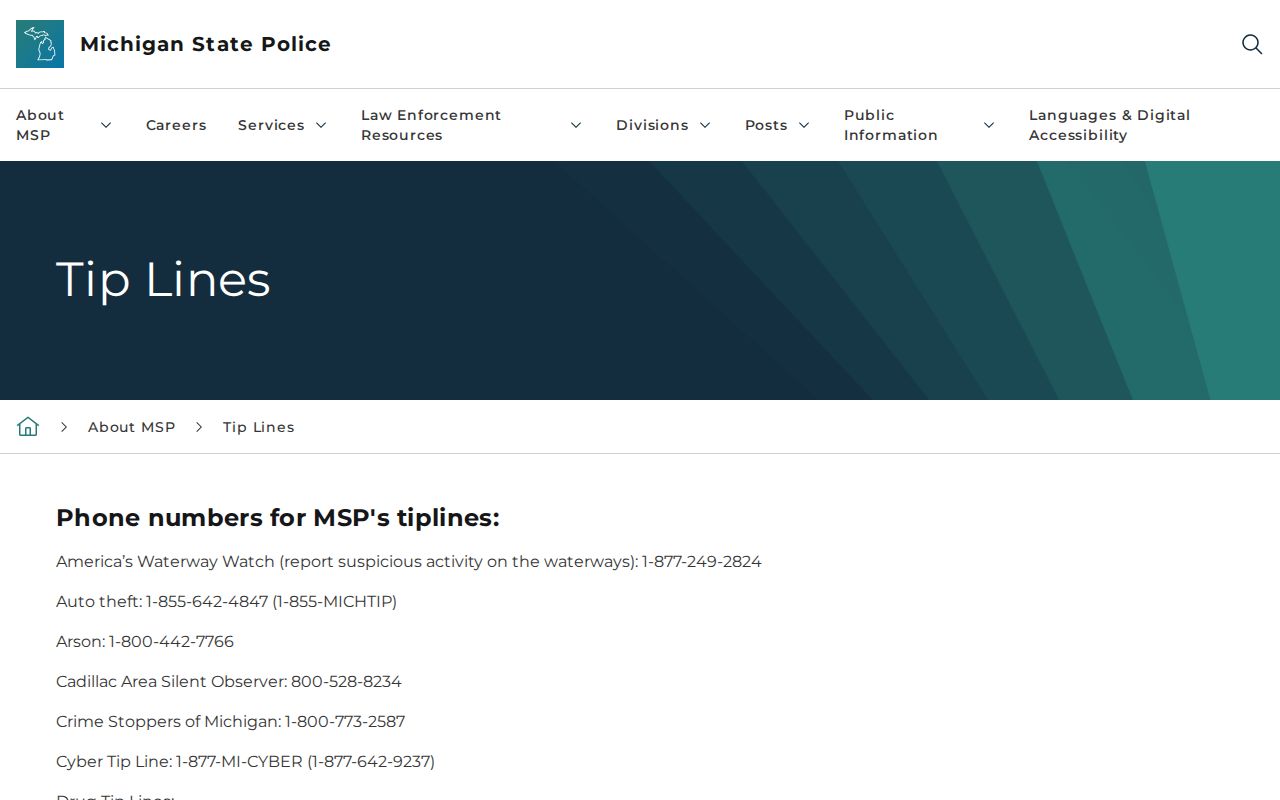
So the shape of things in Osceola County is simple: one statewide program with open tip channels, and no county-level list below it. Use the numbers to pass along what you know. A tip line confirms no warrant status and no identity.
Reporting a Tip Safely
A tip is just information, and the safe route is an official channel that keeps you out of the picture. Never approach, follow, question, or photograph anyone because of a published list or a private search result. Let Osceola County investigators do that work.
Key Point: Call 911 for an emergency, use a published tip line for information, and never put yourself in contact with a wanted person.
Tell the operator only what you truly know: what you saw, when, and where it happened. Admit plainly if you are unsure about an identity. Tip programs usually accept anonymous reports and may pay rewards through a set process. The agency running the program, not any Osceola County page, sets those terms.
Western District Marshals and Osceola Warrants
Federal fugitive work adds another layer. Osceola County belongs to the Southern Division of the U.S. District Court for the Western District of Michigan, where the U.S. Marshals Service runs district programs with its own public tip line. A federal page describes federal activity. It cannot turn a county warrant into a federal one. The Michigan Attorney General's March 2026 release on Operation Survivor Justice shows how this coordination works in practice, with prosecutors, state resources, and the Marshals teaming up to find and return fugitive offenders who have outstanding warrants. It is a useful window onto enforcement. It is not an amnesty, though, and it is not a public list. A reference page has no business repeating the private individual the release names. Treat it as an example of agencies working together, nothing more.
Most Wanted Lists vs Active Warrants
A most wanted page and an active warrant are not the same thing in Osceola County, and the mix-up sends people to the wrong office. One is a list somebody chose to publish. The other is a live case status that only the issuing court controls.
| Feature | Most Wanted List | Active Warrant |
|---|---|---|
| What it is | An agency's published selection | A court's open order in a case |
| Who decides | The publishing agency's program staff | The judge or magistrate who issued it |
| Coverage | A subset chosen for attention | Every case where a warrant is open |
| How it ends | An agency removes the entry | The court recalls it or an officer serves it |
| How to confirm | Read the program page | Ask the clerk of the issuing court |
Even a well-kept Osceola County most wanted page can't stand in for the court file. The file is what a judge and an officer actually act on.
Osceola Warrants Are Not a Criminal History
Michigan's public criminal-history tool is ICHAT, and it answers a different question than an Osceola County warrant check. It returns a name-based history under its own rules, and the state says warrant information and suppressions are not available through it. Plenty of records are left out, too. Federal, tribal, traffic, juvenile, local misdemeanor, and out-of-state records all fall outside it.
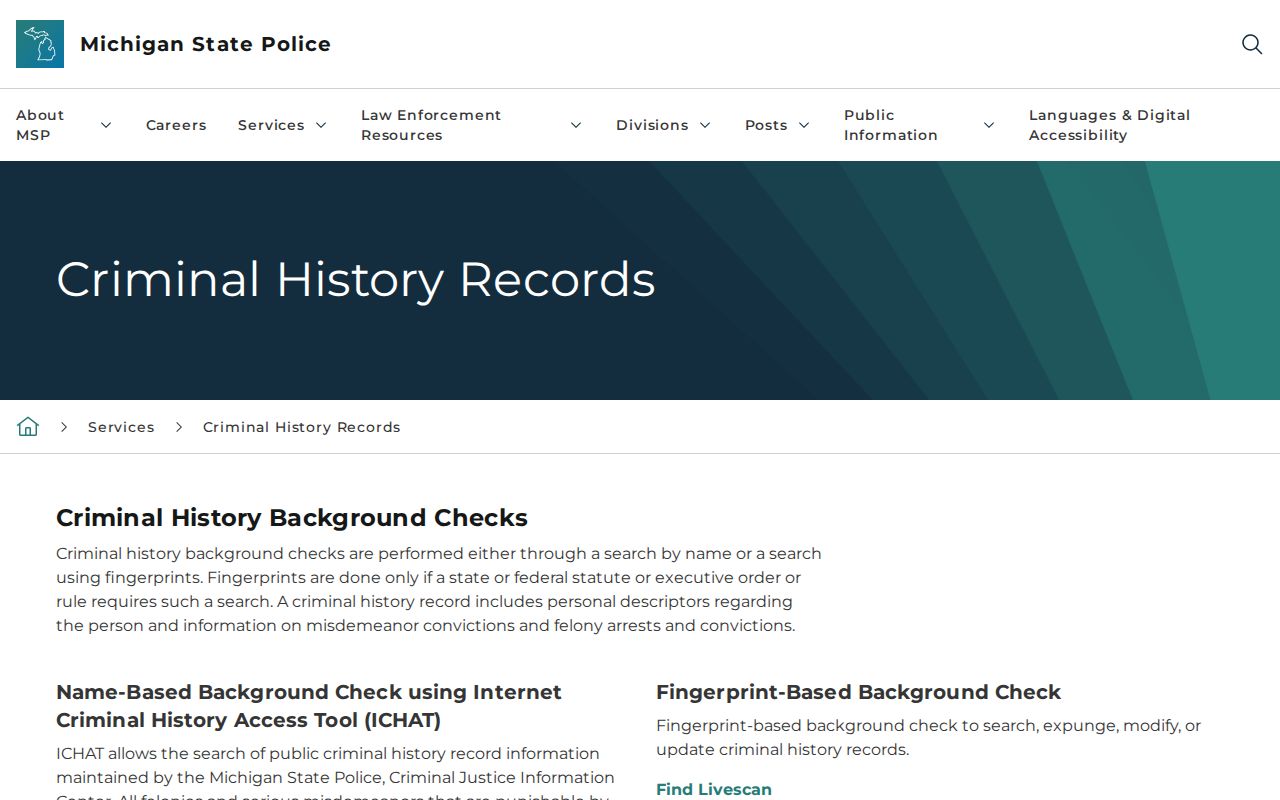
The state draws the line on its own records page. An Osceola County criminal history record is not a warrant check, so confirm with the issuing court.
If You Think You Are on a List
A published entry means call the court. First confirm the case number and the issuing court. Then ask the Osceola County clerk what the file shows today. Wanted pages refresh on their own schedule, so a cleared case can linger online after the court closed it.
Important: Contact a Michigan attorney and the issuing court, and do not approach anyone about a listing on your own.
If a warrant is open, the path forward looks like any other case. Hire an attorney. Or appear voluntarily under MCR 6.105. Ask about bond or release conditions the court sets, and request a recall if the court will grant one. The Osceola County warrant records home page gathers those steps, and the status of a specific case is covered under outstanding warrants.
Osceola Wanted Program Records by FOIA
No roster posted? A program policy may still be requestable. The county FOIA coordinator handles Osceola County records, while the Michigan State Police publish their own requestor guide for state files.
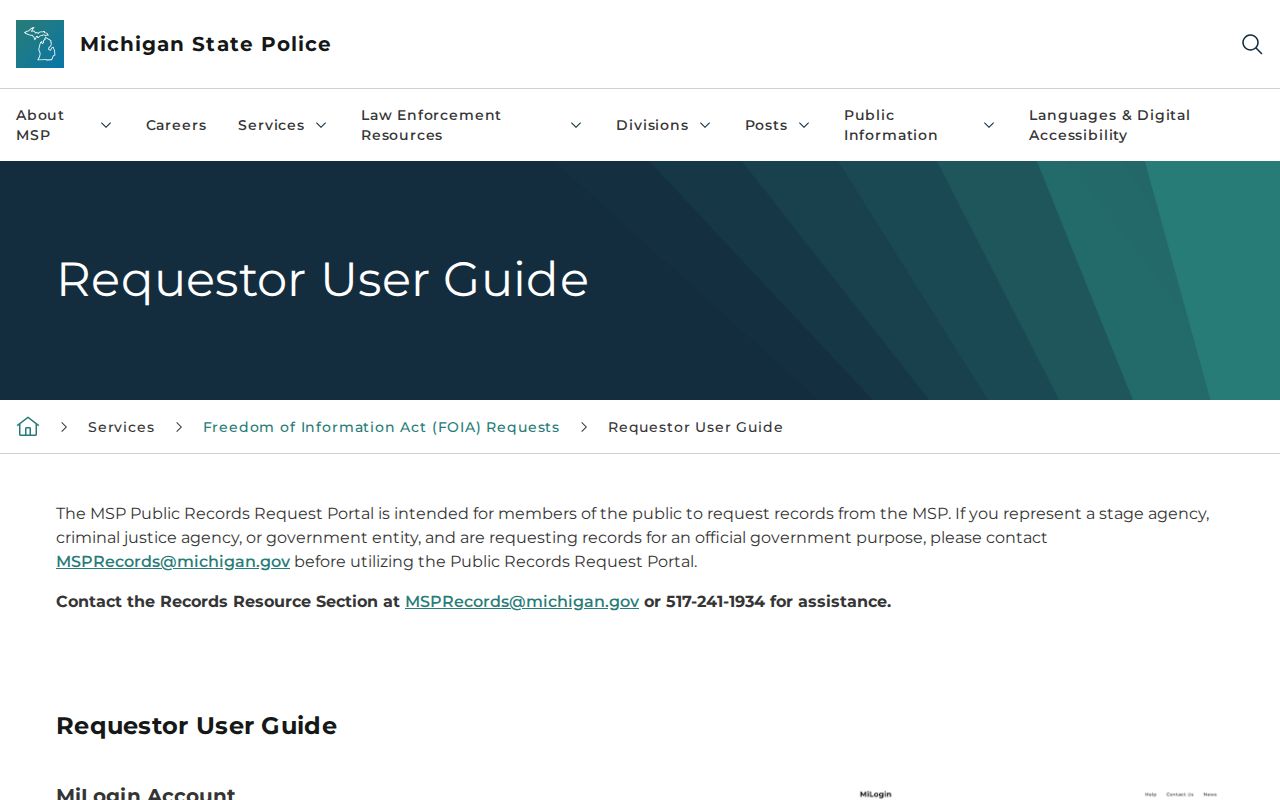
That requestor guide covers the state's route, which helps when your question concerns a statewide program rather than an Osceola County file. Ask for something that already exists. A policy, a program description, or a blank form all work. An agency will not compile a new list of names, and MCL 15.243 lets it withhold investigative material.